Nutritional insights into octopus diets in aquaria
DOI:
https://doi.org/10.19227/jzar.v14i1.985Keywords:
aquaria, Comparative nutrition, octopus, proximate analysisAbstract
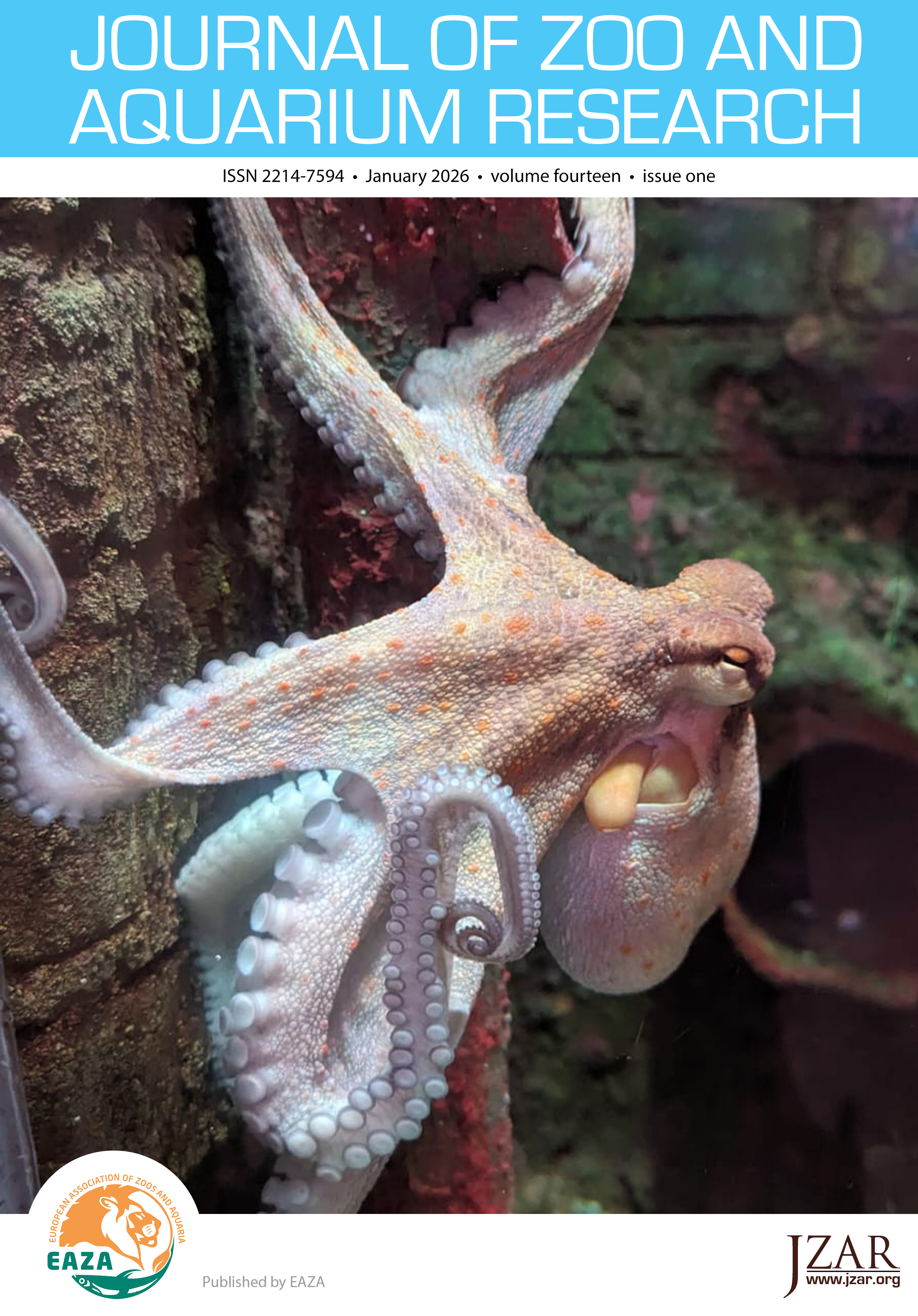
Common octopus Octopus vulgaris are a popular exhibit in aquaria; however, there is limited research on the nutritional requirements of this species. The current information available is from the aquaculture industry and thus focused on young individuals and maximising growth rates. Diets for 17 common octopus housed in aquaria in Europe were collected and ingredients identified. Nutritional analyses of these items were undertaken, including protein, fat, energy and a range of minerals to produce profiles of each animal’s weekly diet. All but one collection fed a mixture of fish and marine invertebrates with shore crabs being the most provided item followed by molluscs (mussels and clams), mimicking the natural diet. Octopus were fed between 3 and 7 times per week. All of the diets had protein levels above 50 % (in dry matter, DM) and many of the diets (59 %) had protein levels of over 60 % DM, which is expected as protein is the main macronutrient for octopus. Fat levels were variable between collections with most diets being higher in fats than recommended. This study highlights the variation in diets provided to common octopus. Further research on the impact of these diets on growth, development and longevity would be beneficial in developing recommendations for octopus diets.
Downloads
Additional Files
Published
How to Cite
Issue
Section
License
JZAR fulfils the DOAJ definition of open access and provides free and open access to the full text of all content without delay under a Creative Commons licence. The copyright holder of JZAR publications grants usage rights to third parties, allowing for immediate free access to the work and permitting any user to read, download, copy, distribute, print, search, or link to the full texts of articles.