Evidence based ex situ strategy for breeding and release management to support European wildcat Felis silvestris recovery in Scotland
DOI:
https://doi.org/10.19227/jzar.v14i3.1014Keywords:
behaviour, conservation translocation, evidence-based husbandry, ex situ, wildcatAbstract
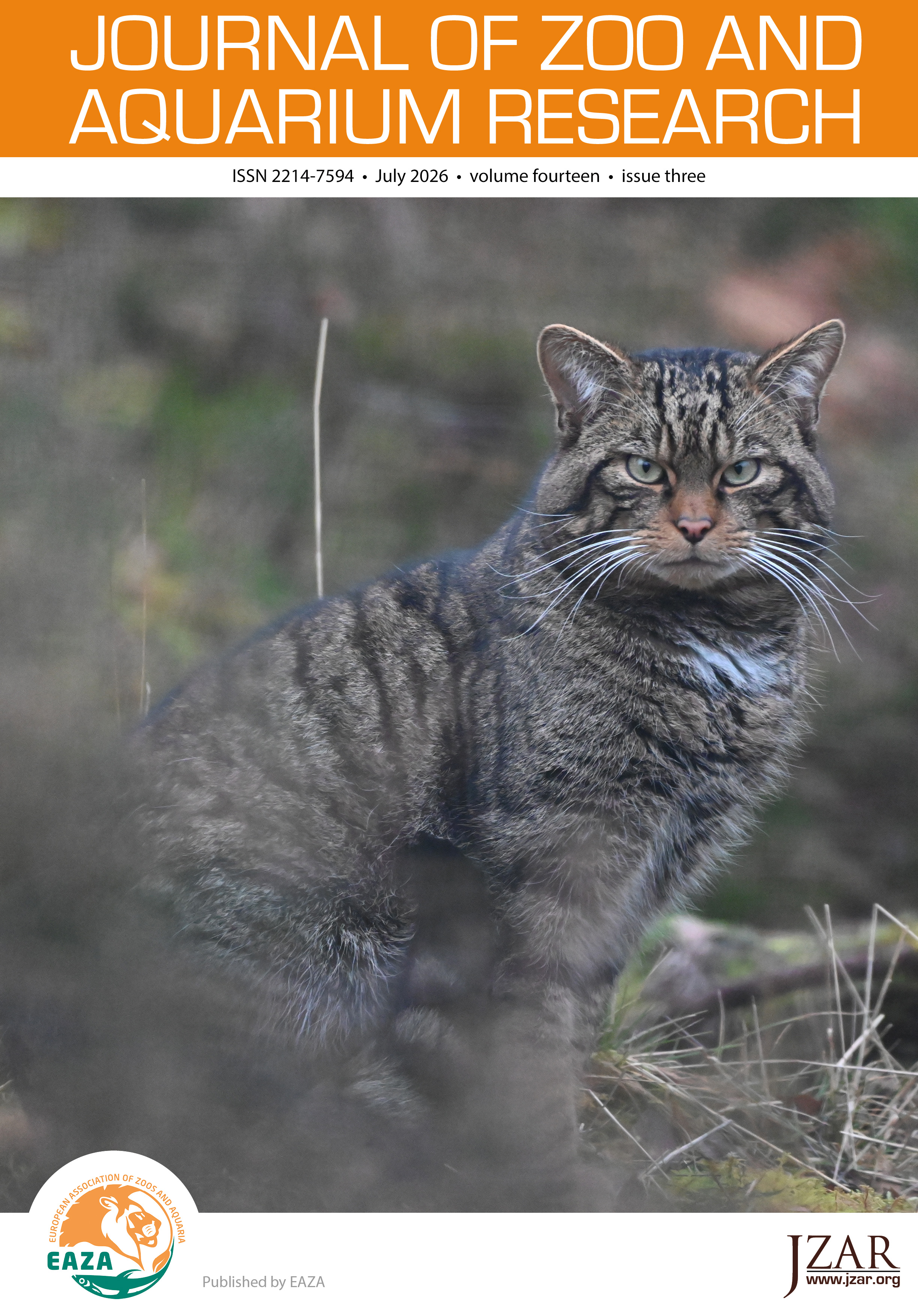
Following a 2019 International Union for the Conservation of Nature (IUCN) status review, the wild population of the European wildcat Felis silvestris in Scotland was considered to be non-viable and in need of reinforcement if its extinction was to be prevented. In 2020 ‘Saving Wildcats’ was established as a European partnership project led by the Royal Zoological Society of Scotland and supported by European Union LIFE funding. Saving Wildcats was developed as the first UK project to breed wildcats for release. In 2023, the first releases of captive-born wildcats in Great Britain were carried out and 10 months later post-release survival is estimated at 95% (18/19), with wild reproduction recorded in 2024. A critical tool for this project has been the development of a dedicated “Conservation Breeding for Release Centre”, which between 2022-2025, produced 56 offspring, with 51 surviving to a minimum of 6 months old (91%) and 48 individuals surviving to the point of release (1-2 years old; 94%). Here, we present a detailed overview of the ex situ management strategy, focusing on population management, animal husbandry, and remote behaviour monitoring and analysis. We provide summary data on the reproductive and behavioural profiles of the first two years of releases (2023 and 2024, n=32), documenting for the first time individual variation in pre-release behaviour of wildcats through behavioural assessments. These data can now serve as a benchmark for future recovery programmes committed to reintroducing threatened carnivores and help generate long-term understanding of ex situ pre-release behavioural and management factors contributing to individual post-release survival in the wild.
Downloads
Published
How to Cite
Issue
Section
License
JZAR fulfils the DOAJ definition of open access and provides free and open access to the full text of all content without delay under a Creative Commons licence. The copyright holder of JZAR publications grants usage rights to third parties, allowing for immediate free access to the work and permitting any user to read, download, copy, distribute, print, search, or link to the full texts of articles.